Capability · Tube Processing

Tube processing (cutting and bending) Tube & Profile Processing (Cutting & Bending)

Rotary-axis CNC laser cutting plus controlled tube bending — supporting repeatable fit-up, weld preparation and fabrication-ready assemblies.

Rotary-axis cutting CNC tube bending Fit-up & weld preparation
  • Cut features (straight cuts, contours, slots and holes) for tubes and profiles.
  • Controlled bending to support assembly geometry and repeatable fabrication.
  • Final requirements and constraints confirmed during RFQ and drawing review.

Positioning

Tube & profile processing positioned for production-ready cut accuracy and bending repeatability on structural and functional assemblies.

  • Cut + bend workflows designed for stable downstream welding, machining and assembly.
  • Optimized for part families where geometry fidelity and interface alignment matter.
Scope boundaries

Suitable for tubes and profiles where cut quality, length accuracy and bending intent are defined in the drawing set.

  • Radius, springback and dimensional targets confirmed during RFQ (material, wall thickness, geometry).
  • Process window validated per part family; fixtures and datum strategy reviewed for repeatability.

Integration with welding & machining

Cut ends and bent geometries prepared to support stable welding outcomes and clean machining references when required.

  • Cut lengths and bend angles aligned to jig/fixture strategy and assembly fit.
  • Option for downstream machining of critical interfaces after fabrication.

Quality & risk control

Process-specific risks (burrs, distortion, ovality, springback, tolerance stack-up) are addressed via method selection and verification.

  • Bend repeatability managed through material control, tooling selection and first-article validation.
  • Cut edge condition and end geometry verified to drawing; secondary ops defined if required.

Customer interface

Structured technical interface for clarification of geometry, tolerance and process requirements, with disciplined communication throughout the quotation phase and the part lifecycle.

RFQ intake
Drawing review → cut & bend feasibility → datum & quality alignment
Series support
Repeatable bending, stable cutting output, predictable fabrication flow
CAPABILITY STATEMENT

Tube processing engineered for structural fabrication and repeatability

We combine rotary-axis tube/profile cutting and controlled tube bending to support stable fit-up, weld access and predictable assembly geometry. The output is designed to integrate cleanly into welding and fabrication workflows.

All parts are manufactured build-to-print, strictly according to customer drawings and specifications.

MANUFACTURING LIMITS

Clear boundaries for RFQs and predictable fabrication outcomes

Dimensional envelope below reflects the verified cutting capacity for tubes and profiles. Bending parameters are aligned during RFQ review.

Cutting scope

  • Cutting process Laser (rotary axis)
  • Primary output Cut + features
straight cuts coping / contours slots holes weld preparation

Bending scope

  • Bending process CNC tube bending
  • Bend parameters Per drawing / RFQ
controlled bend geometry repeatable programs multi-bend parts fit-up alignment

Dimensional envelope (cutting)

  • Round tube max diameter Up to Ø350 mm
  • Rectangular/square max section Up to 300 × 300 mm
  • Max length Up to 7000 mm

Quality & alignment

  • Tolerances Per drawing / RFQ
  • Cut edge / weld prep Per RFQ
  • Bend radii / springback Per RFQ

Final tolerances, edge requirements, material range and bending constraints are confirmed during RFQ review and technical alignment.

PRODUCTION SCOPE

From cut tubes to repeatable bent parts and assemblies

Prototype and pilot fit-up

Fast evaluation cycles for cut features, bend geometry, weld access and assembly sequence validation.

Low- to medium-series programs

Repeatable cut/bend outcomes for stable geometry and consistent assembly performance.

Fabrication-ready delivery

Reduced manual rework with parts aligned to welding, jigging and downstream fabrication steps.

OPERATIONAL CONTEXT

Context for evaluation

Practical overview for RFQ assessment. Detailed parameters are aligned when your drawing set is reviewed.

Material range

  • Carbon steels
  • Alloy steels
  • Stainless steels
  • Other materials upon request

Resources (overview)

  • Rotary-axis tube & profile laser cutting
  • CNC tube bending for controlled geometry and repeatability
  • Integration-ready output for welding and fabrication workflows

Typical components

  • Frames, supports and tubular structures
  • Bent tubes for welded subassemblies
  • Profiles with holes/slots for assembly features
  • Cut-to-fit and bent parts for jigs and fixtures
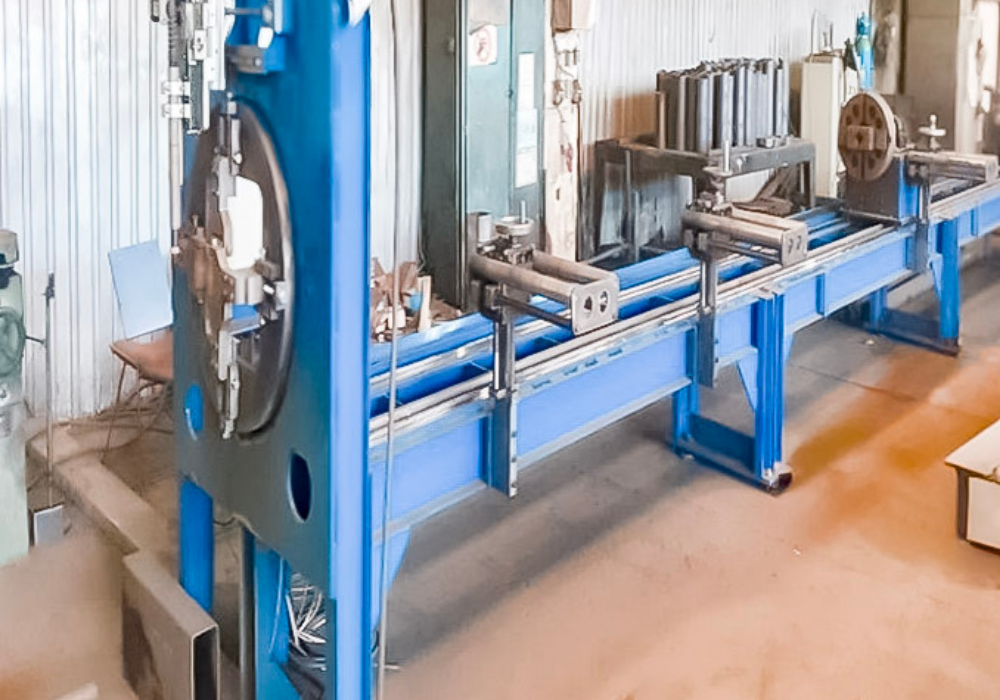
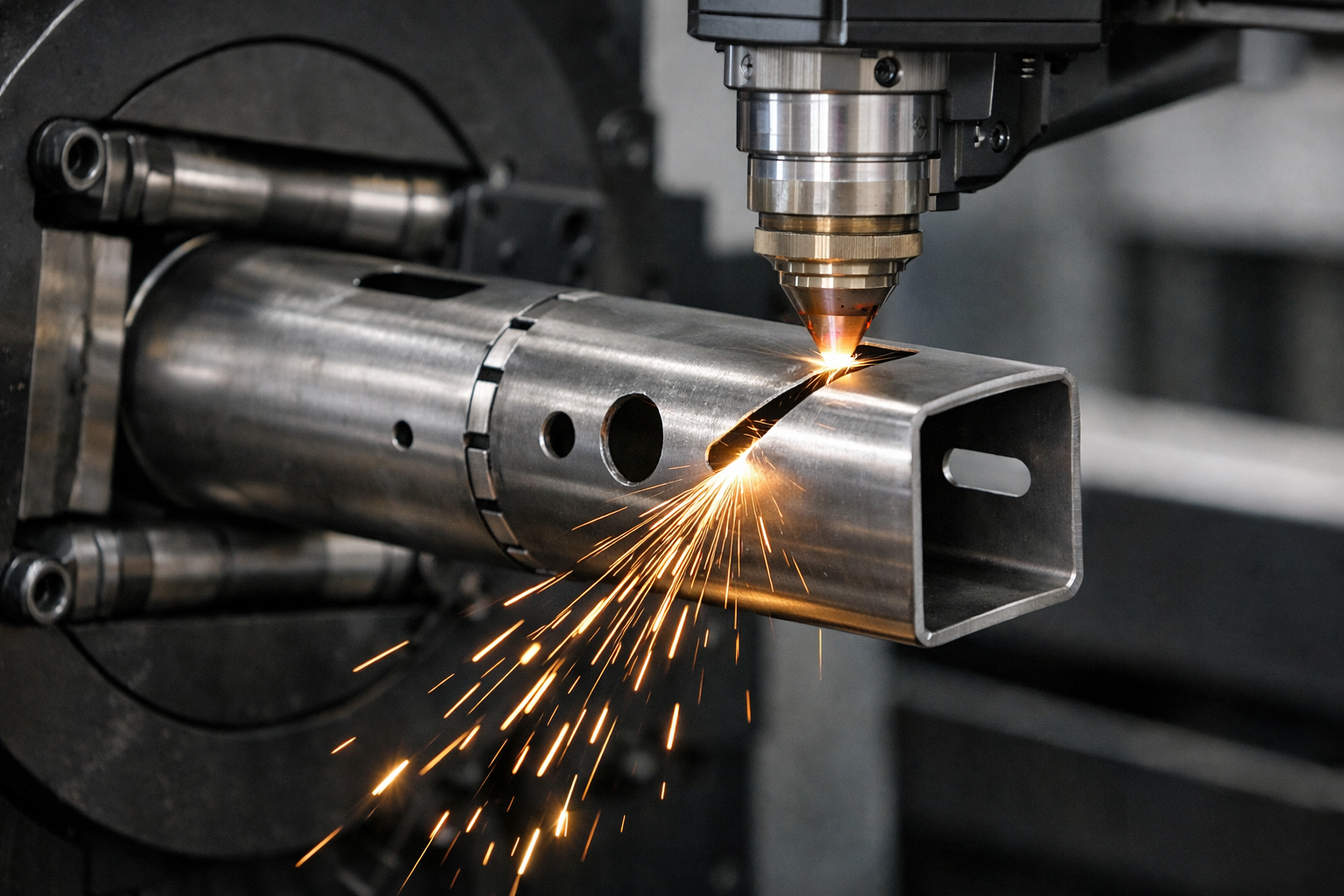
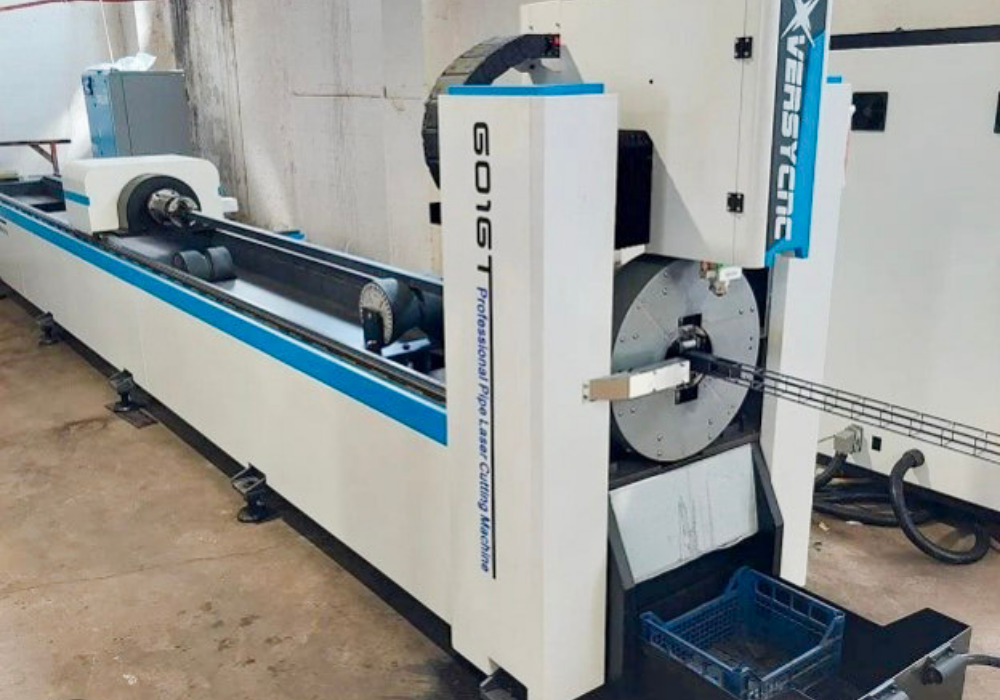
Tube profile laser cutting photo
Tube profile processing photo
RELATED CAPABILITIES

Explore adjacent processes for complete part delivery

View all capabilities