Capability · Welded Assemblies

Welding process Welding & Fabrication

Certified welding & fabrication for load-bearing and structurally critical assemblies, built build-to-print with controlled process discipline, dimensional control and documented inspection.

Manual & robotic MIG/MAG ISO 3834-2 · EN 1090-2 EXC2 Dimensional & VT control
  • Welded structures and subassemblies for agriculture, construction and heavy-equipment applications.
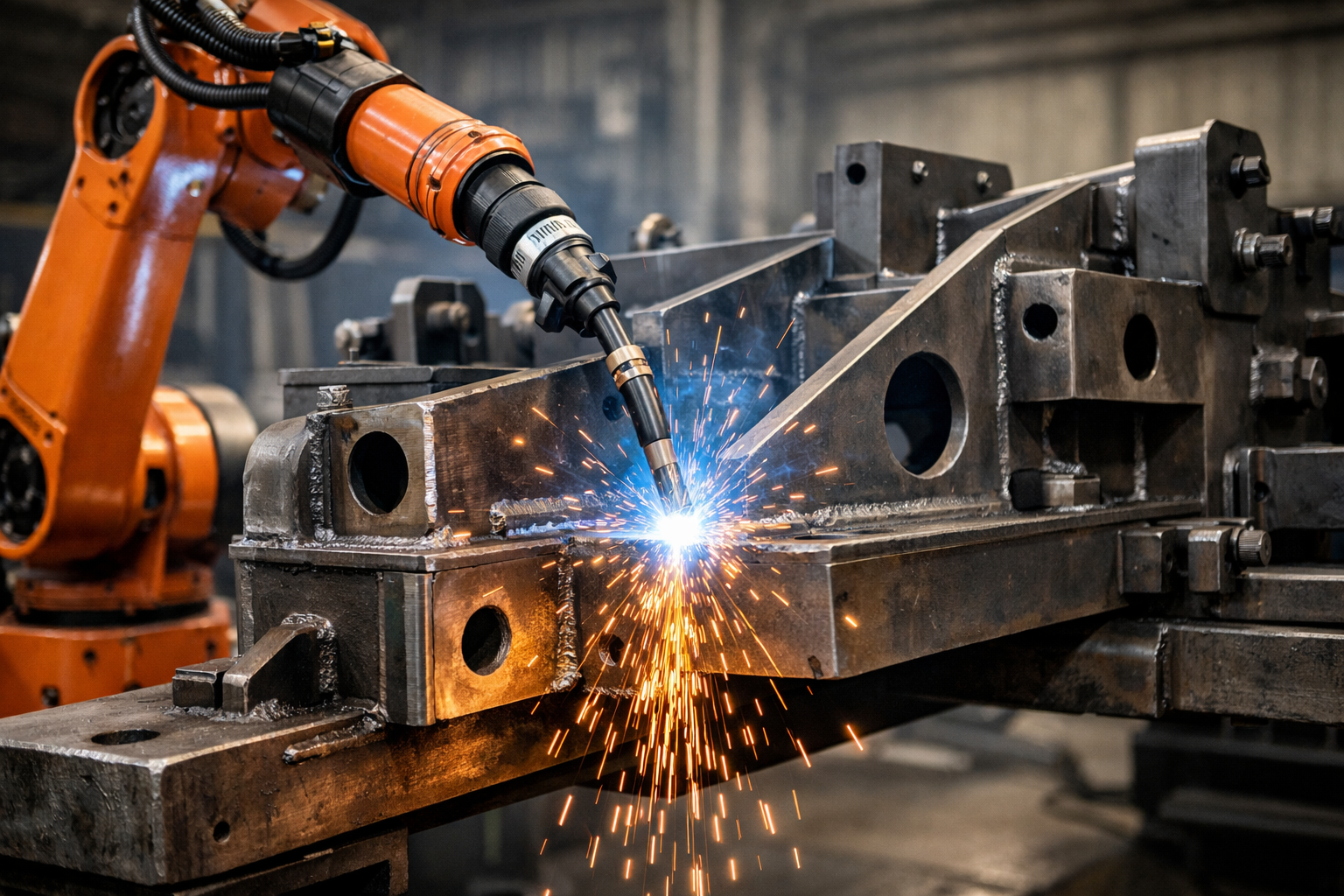
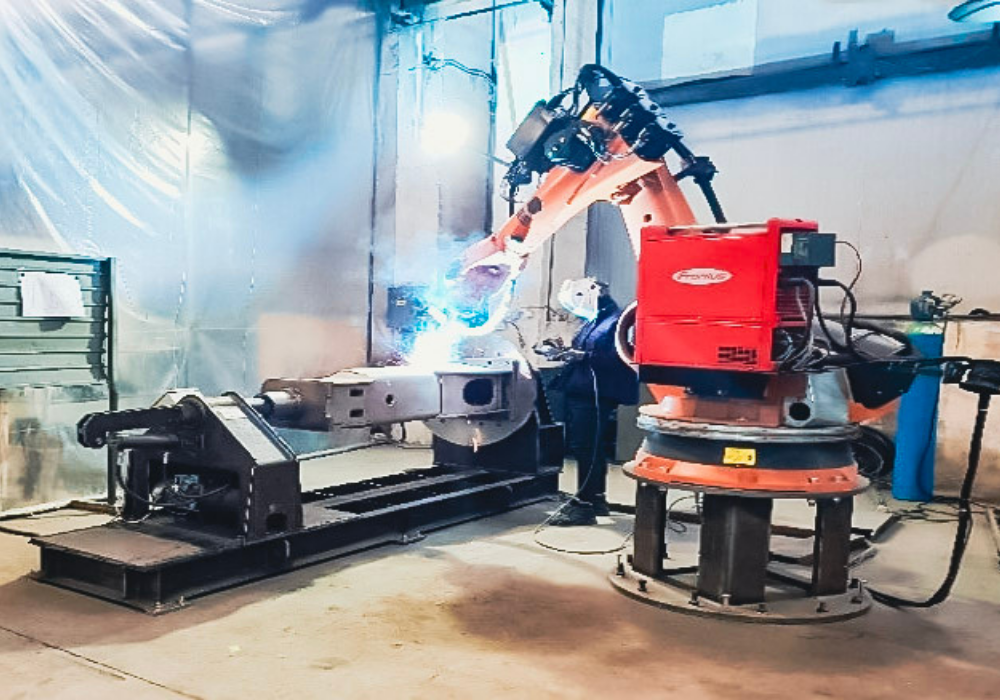
  • Robotic welding capability for repeatable seams, stable throughput and consistent quality.
  • Integrated preparation and finishing steps (cutting, forming, calibration, surface prep) aligned during RFQ.

Positioning

Certified welding & fabrication for structurally critical assemblies, designed for repeatable production and predictable field performance.

  • Build-to-print execution with controlled fit-up, sequence and distortion management.
  • Aligned for downstream machining, assembly interfaces and traceable inspection.
Scope boundaries

Suitable for weldments where joint integrity, dimensional stability and inspection discipline are defined within the drawing/spec pack.

  • Material grade, thickness, joint design, and acceptance criteria confirmed during RFQ.
  • Fixtures, datum scheme and tolerance stack-up reviewed for repeatability across series.

Integration with cutting, forming & machining

Pre-fabrication preparation and post-weld operations are planned to protect geometry and functional interfaces.

  • Cutting/forming steps aligned to fit-up quality, weld access and production takt.
  • Option for post-weld machining on critical reference surfaces and mounting faces.

Quality & risk control

Welding risks (distortion, lack of fusion, porosity, tolerance drift) are addressed via process selection, sequence control and inspection.

  • Visual testing (VT) and dimensional verification defined per part family and requirement set.
  • Robotic welding used where it improves seam repeatability and throughput consistency.

Customer interface

Structured technical interface for clarification of geometry, tolerance and process requirements, with disciplined communication throughout the quotation phase and the part lifecycle. WPS/WPQR scope aligned during RFQ and technical clarification phase.

RFQ intake
Drawing/spec review → WPS/sequence alignment → fixture & inspection plan
Series support
Repeatable setups, robotic seams where applicable, controlled checkpoints
WELDING QUALITY MANAGEMENT

ISO 3834-2 framework for controlled, traceable welded assemblies

A structured welding quality system supports repeatability, documented compliance and predictable structural performance across prototypes and series production.

Process control

Welding is executed under controlled parameters and process discipline to reduce variability and stabilize output.

  • Welding sequence and controlled fit-up to manage distortion and joint integrity.
  • Defined checkpoints for preparation, welding and post-weld condition.
  • Change control for process-critical steps, aligned during RFQ and ramp-up.

Roles & responsibility

Clear responsibility for welding coordination and quality ensures consistent interpretation of requirements and execution discipline.

  • Welding coordination appointed in accordance with EN ISO 14731, aligned with EN 1090-2 EXC2 execution requirements.
  • Qualified personnel assigned per part family and requirement level.
  • Structured escalation for nonconformities and corrective actions when needed.

Documentation & traceability

Documentation supports traceable production and inspection, aligned with customer drawings/spec packs and agreed ITPs.

  • Documented inspection status and verification records (VT / dimensional), per requirement set.
  • Material certificates and traceability maintained where required by PO/spec.
  • Procedure and qualification references available as part of the technical pack, when requested.
Typical outputs
ITP / checkpoints · VT record · dimensional report · traceability references (as required)
Alignment phase
RFQ review → procedure alignment → fixture/datum strategy → inspection scope
CAPABILITY STATEMENT

Controlled welding and fabrication for predictable structural performance

Our welding capability supports structural steel assemblies where joint integrity, repeatability and inspection discipline are essential for downstream machining, assembly and long-term field performance.

All assemblies are manufactured build-to-print, strictly according to customer drawings and specifications.

PROCESS & QUALITY FRAME

Clear production scope for RFQs and technical alignment

The overview below reflects stable, repeatable production practice. Final requirements are confirmed during RFQ review.

Process scope

  • Primary welding process MIG/MAG
  • Execution modes Manual + robotic
  • Secondary processes MMA / stick (111) · TIG (141)
manual MIG/MAG robotic MIG/MAG (KUKA) manual MMA / stick (111) — as required fit-up & assembly welded frames & plates calibration (TBC) dimensional control

Materials & weldable thickness

  • Typical material range S235 / S275 / S355 / S690QL / S960QL / Hardox®
  • Weldable thickness (MIG/MAG 135) Up to 50 mm (ISO 3834-2 certified scope)
  • Certified production envelope L ≤ 10 m · Ø ≤ 500 mm · unit weight ≤ 5 t
Note: Secondary processes per ISO 4063: 111 (MMA/stick) and 141 (TIG) — as required by drawing/spec.

Deliverables / documentation pack

  • Inspection pack ITP / checkpoints · VT record · dimensional report (as required)
  • Traceability EN 10204 3.1 certificates + heat/lot traceability (per PO/spec)
  • Welding documentation WPQR/WPS references available; provided where required

Certifications & procedures

  • ISO 3834-2 Confirmed
  • EN 1090-1 Factory Production Control (FPC) certified
  • EN 1090-2 Execution requirements applied · EXC2
  • WPQR/WPS Available per qualified procedures; WPQR provided where required by drawing/spec
  • Welder qualification ISO 9606-1

Inspection & control

  • Dimensional control 3D Arm · Confirmed
  • Weld seam inspection VT per ISO 17637 · Acceptance per ISO 5817 (B/C/D per drawing)
  • Post-weld calibration TBC
  • NDT MT / PT / UT / RT · Internal capability (ISO 9712 qualified personnel)
  • Material traceability Material certificates EN 10204 3.1 available; heat/lot traceability maintained per PO/spec

Inspection scope, NDT requirements, acceptance criteria and material traceability level are defined per drawing and inspection plan, and confirmed during RFQ and technical alignment.

PRODUCTION SCOPE

From single weldments to repeatable assembly programs

Typical engagement models aligned to industrial sourcing and OEM delivery cadence.

Welded structures and frames

Frames, brackets, supports and structural plates for heavy-duty equipment and subsystems.

Welded + CNC machined subassemblies

Assemblies prepared for machining interfaces, controlled datums and functional mounting faces.

Repeatable production windows

Stable setups with documented process discipline, inspection checkpoints and predictable delivery.

OPERATIONAL CONTEXT

Practical overview for RFQ evaluation

Equipment overview and typical output categories. Detailed constraints (dimensions, weights, fixtures) are aligned during review.

Welding resources

  • 2 KUKA welding robots (robotic MIG/MAG)
  • Manual MIG/MAG welding stations
  • TIG welding stations
  • Manual MMA / stick welding (111) — as required

Preparation & support

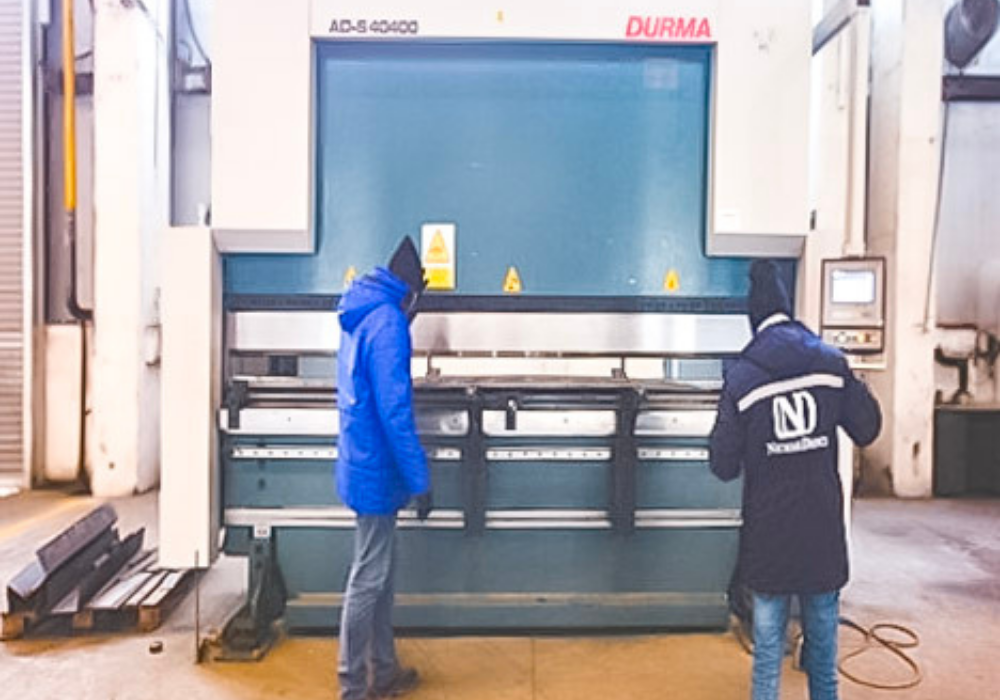
  • Durma CNC press brake: 400T · 4000 mm
  • Sand blasting equipment (surface preparation)
  • Hydraulic press machine: 150 ton
  • Pneumatic threading equipment

Typical structures

  • Welded structures for agricultural machinery
  • Brackets, supports, welded plates
  • Welded + CNC machined subassemblies
  • Medium frames / medium envelope parts
  • Thick parts for subsequent machining
Welding & fabrication photo 1
Welding & fabrication photo 2
RELATED CAPABILITIES

Adjacent processes for complete part delivery

View all capabilities